
Introduction
The Old Telegraph Track is one of Australia’s most iconic motorcycling adventures, renowned for its rugged terrain, challenging river crossings, and stunning Cape York scenery. The OTT was once the only method of communication for those living on the Cape York Peninsula. The Telegraph operated from 1885 until 1962 with just two wires sending morse code via repeater stations and old homesteads, along the way. It was used in WW2 up until 1987 when it was finally dismantled. Now it is an infamous track that many 4wders and motorbike riders come to try and conquer.
The Telegraph Track is a fair bit more than just a trail ride—it’s a proper rite of passage. It demands respect, a bit of planning, and a whole lot of mental and physical grit. From picking your way through long, sandy sections to dealing with river crossings that can change overnight, every kilometre is there to test you.
In this guide, we’ll run you through what to expect—terrain, crossing techniques, bike setup, logistics, and a few safety tips we’ve picked up along the way. Whether it’s your first crack at the Old Telegraph Track or you’re heading back for more, having a good understanding of what you’re in for can be the difference between a stressful trip and one you’ll never forget.
Understanding the Old Telegraph Track: Terrain, Difficulty, and Condition
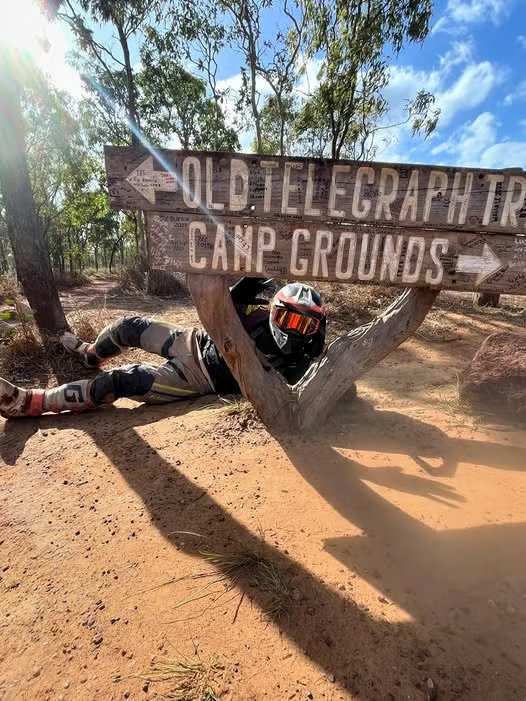
Riding the Old Telegraph Track isn’t a leisurely ride—it throws you straight into some of the toughest country you’ll find in Australia. You’re dealing with rocky sections, unpredictable sand and creek crossings that are never quite the same twice. Then you add in the weather and traffic, and that’s where it really keeps you on your toes.
That mix of terrain—and how much it can change— is exactly what gives the OTT its reputation. It can be unreal one minute and properly testing the next, which is why it catches a lot of people out if they’re not ready for it. During the dry season, you’re dealing with rocky climbs and long sandy sections that really test your control and stamina. But once the wet rolls through, everything changes.
A question we get all the time is, “How hard is the Old Telegraph Track on a bike?” And honestly, it depends. If you’ve got solid off-road experience, you’ll find it tough but bloody rewarding—as long as you stay controlled, pick your lines well, and don’t rush it. Fitness plays a big part too. You’re on the bike for hours, dealing with rough tracks, sand, and creek crossings, so it does wear you down. And to be fair, a lot of riders find the river crossings are what really get in their head—it’s not always about riding ability, it’s about confidence and listening to your tour guide.
Timing makes a difference as well. The time to ride the OTT is from May through to October when the track’s officially open and water levels are usually lower. But even then, things can change quickly, so it always pays to stay up to date with conditions before you head in. There are plenty of Facebook pages you can join to keep up with the latest information.
Another thing to keep in mind on the Old Telegraph Track is the amount of traffic out there- it’s not just motorbikes tackling the track, you’ll be sharing it with plenty of 4wds as well (and the occasional pushbike). You’ll often come across lines of cars waiting at creek crossings and just as often, have cars and bikes coming the other way, so you’ve always got to be switched on and in full control. Don’t assume you have the track to yourself.
At the end of the day, the Old Telegraph Track demands respect. It’s constantly changing, especially with how much traffic goes through there—what you heard about a crossing last week might be completely different when you get there. If you’re planning a Cape York trip, the OTT is the main event… but it’s one you want to be properly prepared for. Its certainly a favourite amongst our customers and the main day they will remember for years to come.
Bit unsure on how to ride sand? Check out our blog on How to Ride Sand on a Motorbike to get some tips.
Major River Crossings: Challenges and Tactical Tips
The heart of the Old Telegraph Track’s challenge lies in its major river crossings—natural obstacles that frequently decide whether a rider presses on or must turn around. Cockatoo Creek at the end of the wet season is widely regarded as one of the most intimidating crossings. Its fast-flowing current combined with uneven, jagged riverbed rocks requires riders to confidently maintain balance in low, steady gears with full control. Many experienced riders swear by first scouting the crossing on foot to select the safest route, avoiding slippery algae patches and unstable rocks that could lead to costly falls or waterlogged bikes. This is why choosing a guided motorcycle tour like Ride Industries is a smart decision. Your tour guide will do all the hard work for you, checking the depth of the river, guiding you through the right line and helping you dodge those big holes.
One of the best parts about the Old Telegraph Track is the number of unreal swimming spots along they way. The crossings might seem daunting on a motorbike but majority of them are made up of beautiful crystal clear water that are safe to swim in. Places like Fruitbat Falls, Elliot Falls, Sam’s Creek and Dulhunty Creek offer some of the best freshwater swims you’ll find anywhere. There’s no shortage of spots to pull up, have a breather and cool off and don’t worry, Couso will always find an excuse to stop for a swim and yarn.
Palm Creek is the first crossing on the OTT and serves as the gateway to the Cape. It can be very intimidating due to the steepness of the entrance into the crossing, but don’t stress, a couple hundred metres downstream is a much nicer crossing perfect for bikes. If you make it all the way through the track, you will arrive at Nolan’s Brook, the last crossing on the track. This is the deepest crossing but for those tackling Nolan’s Brook on a motorcycle, you have the safer option of a log bridge to slowly and carefully cross to avoid the deep water.
After Nolan’s Brook, it’s time to head for the mighty Jardine Ferry. There’s a signposted left hand turn a few kms down the track that takes you back to the PDR. Make sure you take this, otherwise you’ll end up at the Old Jardine Crossing which is now closed and impassable (and full of Crocodiles).
Choosing and Setting Up Your Bike for the OTT
Choosing the right bike for the Old Telegraph Track can make or break your trip. You want something that balances power, weight and reliability—light enough to handle the tight, technical sections, but tough enough to cop the punishment of rocks, corrugations and repeated river crossings (and easy enough to de-drown if it ends up underwater).
Bikes like the KTM 500 EXC-F and Suzuki DRZ 400 are popular for a reason—they’ve got the right mix of power, suspension and manageable weight for Cape York conditions. Bigger adventure bikes like the BMW GS can do it, but they’re far harder work and become a real handful in technical sections and deep crossings.
Bike setup matters just as much as bike choice. A good bash plate protects your engine from rocks, bark busters and handguards save your controls in the inevitable drops (and those darn trees that don’t get out of the way), and aggressive mid-hard tyres give you the grip you need in mud and slippery creek beds. Keeping luggage light and balanced is also critical—too much gear or poor weight distribution can make technical riding and river crossings far harder than they need to be.
If tackling it solo, you’ll also want to carry the right spares, including tubes, tyre levers, bike specific nuts and bolts and basic tools, because help can be a long way away (cable ties are surprisingly handy as well). Fuel planning is another key consideration, with many riders needing extra fuel capacity or support for fuel drops depending on their route. We run the 15L tanks on the KTM and that just gets us through.
At the end of the day, the right bike setup turns your motorcycle from just transport into a reliable tool built to handle everything Cape York throws at it. Riders joining a Cape York dirt bike tour also benefit from expert guidance on setup and bike prep, it also means all the maintenance gets done for you.
Preparation and Logistics for Riding the Old Telegraph Track
Good preparation is what sets up a safe and enjoyable run through the Old Telegraph Track. The best time to ride the OTT is generally from May through to October when river levels are lower and conditions are more manageable, but Cape York can still throw surprises at you, so flexibility is key. Riding with a group or having support makes a huge difference, especially when it comes to river crossings, breakdowns or injuries in remote areas.
Fuel planning is another big one—there are no fuel stations out on the track itself, so you need to carry enough fuel or have planned fuel stops and support in place. The last fuel before the OTT is Bramwell Roadhouse and then you wont see another station until you get to Bamaga. Physical and mental prep matter too. The OTT can be slow, technical and physically demanding, so having experience riding rocky and sandy terrain beforehand will make the trip far more enjoyable.
Before heading off, have a solid pre-ride checklist covering bike prep, spare parts, safety gear and weather monitoring. Keeping an eye on ranger updates, social media and recent crossing reports can help you adjust plans as conditions change. The riders who do Cape York well are the ones who stay prepared, stay flexible and adapt to what the track throws at them.
For more trip planning info, our Packing Guide blog covers common questions about riding in remote Cape York.
Crossing Techniques and Safety Tips for OTT River Crossings
Getting your river crossing technique right is a huge part of successfully tackling the OTT. Before entering any crossing, always walk it first if it’s safe to do so. Check the depth, current, bottom condition and any hidden obstacles so you can pick the best line—usually the shallowest and most stable route, even if it’s not the shortest.
When crossing, keep your body balanced, stay smooth on the throttle, and use a low gear to maintain steady momentum without rushing. Too little momentum and you risk stalling midstream; too much and the current or a hidden obstacle can throw you off line.
Whenever possible, don’t cross alone. Having a mate there to spot, guide and help if things go wrong can make a massive difference. There are always plenty of people on the OTT and they are always happy to lend a hand.
A lot of riders come unstuck by underestimating water depth, rushing in without checking the crossing, overloading their bikes, or ignoring weather conditions that can raise water levels quickly. Good preparation and smart decisions prevent most of these mistakes.
At the end of the day, every crossing should be judged on the conditions, the rider, and the bike. A confident rider on a lightweight bike with support may be fine to tackle a crossing that another rider on a heavier bike should bypass. Local knowledge, ranger updates and recent rider reports can be invaluable out here and can save you from getting caught in a bad situation.
Old Telegraph Track vs Bypass Road: Making the Right Choice
Choosing between the Old Telegraph Track and the bypass road (PDR) comes down to balancing adventure with safety, timing and rider ability. The bypass road winds its way around the OTT and offers a quicker, easier option—especially valuable in the wet season when crossings become dangerous and completely impassable. While you miss some of the iconic scenery and technical challenges of the full track, taking the bypass can save a lot of risk, time and expensive damage.
The bypass is a great option for less experienced riders, those short on time, or groups without proper recovery support. If you’re taking on the full OTT, you need to be ready for unpredictable conditions and be willing to assess water levels, weather and your own limits as you go. Riders who make smart decisions out there are the ones who get the most out of Cape York.
There’s no shame in taking the bypass—it’s not a failure, it’s just good decision-making. Sometimes the smartest ride is knowing when conditions aren’t right and saving the OTT for another day. That’s also where a guided Cape York motorcycle tour can make a huge difference, helping riders of all experience levels make safe, informed calls when tackling the tougher sections.
If you do choose to tackle the OTT and you find yourself a little out of your depth, don’t stress, there are plenty of tracks leading back to the main road. Check out our article on a Beginners Guide to riding Cape York.
FAQ: Answering Top Questions About Riding the Old Telegraph Track
1. How hard is the Old Telegraph Track on a motorcycle?
The difficulty level can change with weather and rider skill level; it is technically challenging during dry periods and can become dangerously difficult when wet. Preparation and experience are key to safety and success.
2. What bike should I take for the Old Telegraph Track?
Lightweight, dual-sport or dirt bikes with solid suspension, ground clearance and a large fuel tank—such as the KTM 500 EXC-F or DRZ 400—are ideal for the track’s demanding terrain.
3. When is the Old Telegraph Track open?
Typically open from May to November during the dry season. We always suggest checking current local updates and river conditions before embarking, something our tour guides take very seriously.
4. What are the major river crossings on the Old Telegraph Track?
Palm Creek, Cockatoo Creek, Gunshot Creek and Nolan’s Brook all bring their own challenges, and each one needs to be approached with the right line choice, good planning and a bit of respect.
5. Should I take the bypass road instead of the Old Telegraph Track?
The bypass offers a safer, faster alternative during wet or adverse conditions and is recommended for less experienced riders, but it sacrifices the full OTT adventure experience. But don’t stress, you still get to check out Fruitbat Falls.
Conclusion.
With the right techniques, solid bike prep, and smart decision-making, the Old Telegraph Track goes from being an intimidating challenge to one of the most unforgettable adventures Cape York has to offer. It is definitely a favourite amongst our customers. Good planning, respect for the ever-changing conditions, and having the right gear can make all the difference when tackling one of Australia’s most iconic rides.
At the end of the day, the riders who do best out here are the ones who stay adaptable, ride to the conditions, and know when to push on and when to take the bypass. There’s nothing wrong with Whether you conquer every crossing or make the call to go around a few, riding the OTT is a serious achievement and a true test of skill, endurance, and adventure spirit. It’s not just about getting through the OTT — it’s about riding it smart and making every challenge part of the story.
Ready to experience the Old Telegraph Track yourself? Contact us to learn about our guided Cape York adventures, or browse our gallery to see the incredible terrain that awaits.